
Sales email personalization best practices are data-driven tactics that tailor message content, timing, and structure to each individual prospect based on real behavioral and contextual signals. Generic outreach is losing ground fast. Behavioral personalization drives 3–6x higher conversion rates than simply inserting a first name, and advanced purchase triggers can lift revenue by 25–55%. The difference between an email that gets a reply and one that gets deleted often comes down to how specifically you've connected your message to what the prospect actually cares about right now.
1. what data points actually drive sales email personalization?
Effective personalization starts with the right data, not the most data. There's a clear hierarchy worth knowing.

Static data covers the basics: name, job title, company name, and industry. These are table stakes. Every CRM holds this information, and using it correctly prevents embarrassing errors, but it won't make your email stand out.
Behavioral and contextual data is where personalization gets real traction. This includes:
- Recent content downloads or webinar attendance
- Website pages visited and time spent on pricing or product pages
- Previous purchase history or renewal dates
- LinkedIn activity, such as posts published or job changes in the last 30 days
- Email engagement history, including opens, clicks, and reply patterns
Zero-party data is information prospects give you directly through surveys, preference centers, or onboarding forms. It's the most accurate signal you can get because the prospect told you exactly what they want.
Your data sources should include your CRM (Salesforce, HubSpot), website analytics (Google Analytics 4), and LinkedIn activity. The ceiling of your personalization is always the quality of your data. Stale or inaccurate records produce emails that feel off, and prospects notice immediately.
Pro Tip: Run a quarterly data audit on your CRM. Flag contacts with no activity in 90 days and re-verify job titles before launching any personalized campaign.
2. how to write personalized sales emails that get replies
Structure and content work together. Getting one right without the other still produces mediocre results.
-
Keep it short. Best-performing sales emails run 50–125 words. That's not a suggestion. It's the range where response rates peak. Longer emails signal that you're more interested in talking than in listening.
-
Open with a specific trigger. Reference something real: a LinkedIn post they published, a funding round their company announced, a product they recently launched. Vague openers like "I noticed your company is growing" read as filler. Specific openers like "Saw your post on scaling SDR teams last Tuesday" read as genuine.
-
Connect the trigger to your value proposition. The personalization hook should lead directly into why you're reaching out. If they posted about hiring challenges, your opening line about that challenge should connect naturally to what you solve. Don't make the prospect do the mental work of connecting the dots.
-
Write one clear call to action. Ask for one thing. A 15-minute call, a reply to a single question, or a link to book time. Multiple asks create friction and reduce replies.
-
Use a professional but conversational tone. Avoid corporate language like "I wanted to reach out to discuss potential synergies." Write the way you'd speak to someone you respect but don't know well yet.
Pro Tip: Write your subject line last. Once you know exactly what your email says, you can write a subject line that reflects the specific hook rather than a generic teaser. Subject lines under 50 characters with no all-caps or spam trigger words can increase open rates by 10–20%.
3. segmentation strategies that multiply personalization impact
Segmentation is how you scale personalization without writing every email from scratch. It lets you build message frameworks that feel specific to a group while leaving room for individual customization.
Firmographic segmentation
Group prospects by industry, company size, and revenue range. A VP of Sales at a 50-person SaaS startup has different pain points than a VP of Sales at a 5,000-person manufacturing company. Your messaging should reflect that gap directly.
Behavioral segmentation
This is the most powerful segmentation layer for sales emails. Group prospects by what they've done: visited your pricing page, downloaded a specific guide, attended a webinar, or gone cold after a previous conversation. Each behavior signals a different stage of interest and requires a different message.
Persona-based segmentation
Build two or three buyer personas based on role and decision-making authority. A CFO cares about cost reduction and ROI timelines. A Head of Marketing cares about pipeline contribution and brand reach. The same product pitch rewritten for each persona performs significantly better than a one-size-fits-all version.
| Segmentation Type | Primary Signal | Best Use Case |
|---|---|---|
| Firmographic | Industry, company size | Top-of-funnel cold outreach |
| Behavioral | Page visits, email clicks | Mid-funnel follow-up sequences |
| Persona-based | Job title, decision authority | Value proposition customization |
| Geographic | Location, time zone | Send-time optimization |
Dynamic content blocks take segmentation further by rendering different content for different segments within a single campaign, cutting production time by up to 70%. You build one email template, and the platform swaps in the relevant section based on the recipient's segment tag.
4. how automation and AI scale personalized outreach
Automation handles the timing and sequencing. AI handles the content generation. Together, they let a two-person SDR team operate at the output level of a much larger team.
The most effective automation use cases for personalized sales outreach include:
- Behavioral triggers: Send a follow-up automatically when a prospect opens your email three times in 24 hours or revisits your pricing page.
- Send-time optimization: Tools like HubSpot and Salesloft analyze individual engagement patterns and send each email at the time that prospect is most likely to open it.
- AI-generated first lines: Platforms pull LinkedIn activity or company news to generate a personalized opening sentence at scale. You review and edit before sending.
- Sequence branching: If a prospect clicks a link but doesn't reply, they enter a different follow-up track than someone who never opened the email.
The risk is real, though. AI-driven personalization depends entirely on clean, unified CRM data. Without data integrity, AI produces irrelevant or off-putting messages that damage trust faster than a generic email ever would. A prospect who receives an email referencing a job title they left two years ago won't give you a second chance.
Pro Tip: Always keep a human in the loop for AI-generated content. Set a rule that no AI-written email goes out without a 30-second human review. The edit takes less time than the damage control.
Maintain permission-based lists. Sending to contacts who never opted in or who have disengaged for more than six months raises spam complaint rates and hurts your sender reputation across your entire domain.
5. common personalization mistakes and how to fix them
Even experienced sales teams make these errors. Knowing them in advance saves you from burning good prospects.
-
Using fake triggers. Referencing a "recent article" you never actually read, or congratulating someone on a "company milestone" that happened 18 months ago, signals immediately that you're running a script. Prospects detect fake personalization quickly, and it destroys credibility faster than a generic email would.
-
Over-personalizing to the point of discomfort. Referencing too many personal details in one email, such as their college, their hometown, and their last three LinkedIn posts, reads as surveillance, not research. One strong, specific detail is more effective than five.
-
Skipping A/B testing. Subject line wording, opening line format, and call-to-action phrasing all affect response rates. Test one variable at a time across a segment of at least 100 contacts before drawing conclusions.
-
Ignoring list hygiene. Sending personalized emails to a list full of outdated contacts wastes your effort and hurts deliverability. Remove hard bounces immediately and suppress contacts who haven't engaged in 90 days.
-
Sending follow-ups with no new value. Sequential follow-ups capture 42% of replies, but only when each message adds something new. A follow-up that just says "checking in" adds nothing. Reference a new piece of content, a relevant industry development, or a different angle on your value proposition. More than three follow-ups without fresh value raises spam complaints.
Key takeaways
Effective sales email personalization requires specific behavioral data, tight email structure, and disciplined list hygiene working together to drive real response rates.
| Point | Details |
|---|---|
| Use behavioral data first | Behavioral triggers outperform static data and drive 3–6x higher conversions. |
| Keep emails 50–125 words | Concise emails in this range consistently produce the highest response rates. |
| Segment before you personalize | Firmographic and behavioral segmentation makes individual customization faster and more relevant. |
| AI needs clean data | AI personalization fails without accurate, unified CRM records behind it. |
| Follow-ups require fresh value | Each follow-up must add a new signal or angle to avoid spam complaints and disengagement. |
The part most sales teams get backwards
Here's what I've seen after years of watching sales teams roll out personalization programs: they invest in the tools before they fix the data. They buy an AI writing platform, connect it to a CRM full of outdated job titles and stale company names, and then wonder why reply rates don't move.
Data quality is the actual constraint. Not the tool. Not the template. Not the subject line formula. If your CRM has contacts with job titles from three years ago, your "personalized" emails are personalized to a version of the prospect that no longer exists.
The teams that get this right start small. Small email lists actually have an advantage here because they allow a more hands-on, conversational approach. You can verify details manually, write more specific opening lines, and learn what resonates before you try to automate anything.
My honest advice: spend two weeks cleaning your data before you touch your templates. Verify job titles, update company information, and remove anyone who hasn't engaged in six months. Then build your personalization framework on top of that clean foundation. The results will be noticeably different.
The other thing I'd push back on is the idea that AI replaces judgment in this process. It doesn't. AI is fast at generating first drafts of personalized opening lines, but it can't tell you whether a specific reference will land well with a particular prospect. That still requires a human read. The best SDRs I've worked with use AI to get to a first draft in seconds, then spend 20 seconds editing it to sound like themselves. That combination is hard to beat.
— Christian
Put personalization on autopilot with Deskflow
If you're spending hours researching prospects before writing a single email, there's a faster way. Deskflow pulls LinkedIn profile data, recent activity, and company signals to generate personalized outreach messages automatically. You review, edit if needed, and send.
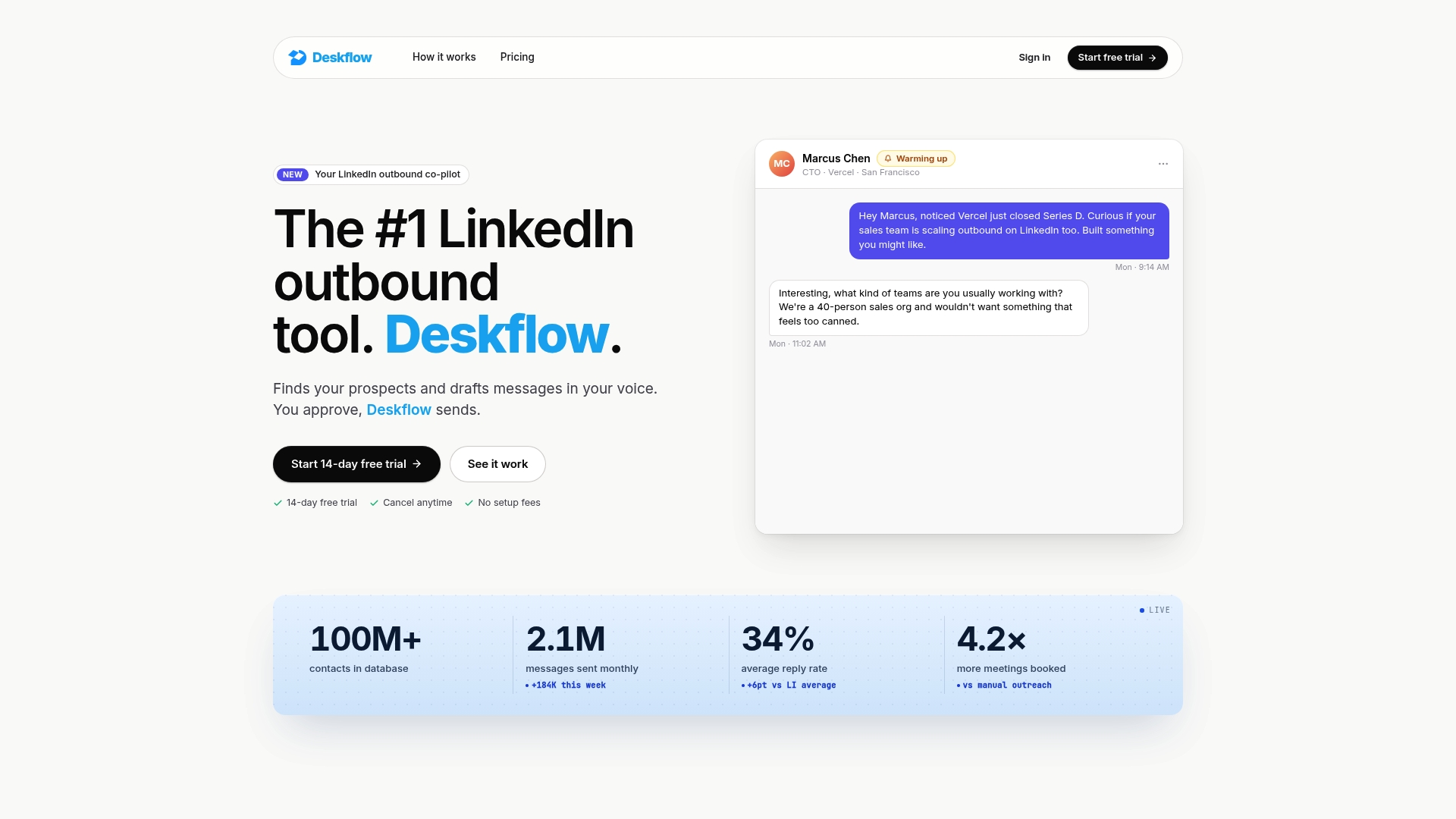
Deskflow handles list building, message generation, follow-up sequencing, and conversation management in one place. Sales teams using it cut research time significantly and spend more time in actual conversations with qualified prospects. If you're ready to run personalized outreach at scale without the manual grind, Deskflow is worth a look.
FAQ
What is sales email personalization?
Sales email personalization is the practice of tailoring email content, timing, and structure to each prospect using specific data points like job title, behavioral signals, and recent activity. It goes well beyond inserting a first name.
How long should a personalized sales email be?
The optimal length is 50–125 words. Emails in this range consistently produce the highest response rates across B2B sales outreach.
What data should i use to personalize sales emails?
Start with behavioral data: recent LinkedIn activity, website visits, content downloads, and email engagement history. Static data like name and title is necessary but not sufficient on its own.
How many follow-up emails should i send?
Send up to three follow-ups, each with a new piece of value or a fresh angle. Beyond three messages without new content, spam complaint rates rise and engagement drops sharply.
Does AI improve sales email personalization?
AI speeds up personalization at scale, but it requires clean CRM data to work correctly. Without accurate records, AI-generated messages can reference outdated information and damage trust with prospects.