
Outbound sales ROI is the ratio of revenue generated by outbound activities to the total cost of running those activities. It is the clearest measure of whether your outbound program is actually profitable. Sales leaders who track this metric, rather than relying on activity counts alone, make better decisions about headcount, tools, and budget. Understanding why outbound sales ROI matters is the difference between running a program on faith and running one on evidence. Platforms like Deskflow, along with frameworks from sales development representatives (SDRs) and pipeline metrics, give teams the data they need to make that shift.
Why outbound sales ROI matters for your program's survival
Outbound ROI is not just a performance score. It is the financial argument that keeps your program funded. Outbound programs lose funding primarily because leaders cannot translate sales metrics into CFO-friendly language. Finance teams do not care about sequences sent or dials made. They care about pipeline created, total cost, win rate, and expected lifetime value.
Those four numbers tell a complete financial story. Pipeline created shows demand generated. Total cost reveals true program spend. Win rate and expected lifetime value together project future revenue. When you present all four, you give budget holders a reason to say yes instead of a reason to cut.

Outbound ROI also serves as insurance against inbound variability. Inbound demand fluctuates with market conditions, algorithm changes, and seasonal patterns. A well-measured outbound program gives you a predictable, controllable revenue lever. That predictability is worth a lot more than most sales leaders realize.
How to calculate outbound sales ROI accurately
The basic formula is straightforward: divide revenue generated by total program cost, subtract one, and multiply by 100 to get a percentage. The hard part is getting both numbers right.
Step 1: Calculate total revenue attributed to outbound
Revenue attribution means tracing closed deals back to their outbound origin. This includes deals sourced directly by SDRs and deals where outbound touchpoints influenced the close. Use your CRM to tag opportunities by source at the point of creation, not at close.
Step 2: Build a fully loaded cost figure
Incomplete cost accounting leads to optimistic ROI and poor scaling decisions. Your cost figure must include SDR salaries and benefits, sales tools and software licenses, data enrichment subscriptions, domain reputation management, management overhead, and training costs. Most teams undercount by leaving out data and management costs. That gap makes ROI look better than it is, and it causes teams to over-hire or over-invest based on inflated numbers.
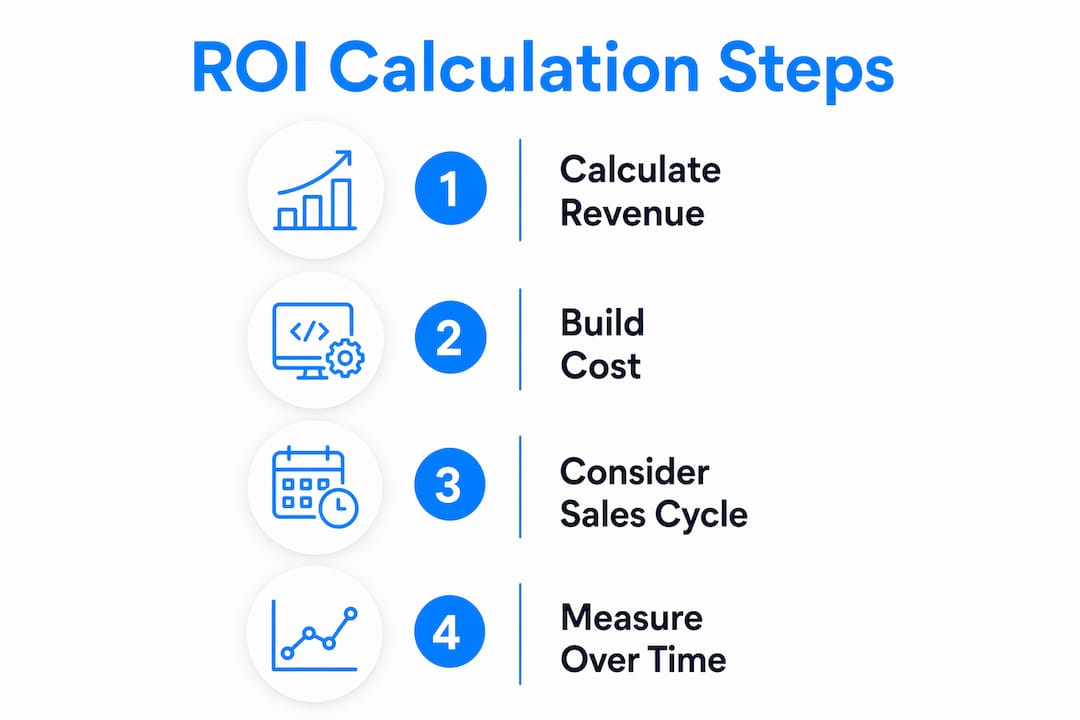
Step 3: Account for sales cycle length
Sales cycles now average 6.5 months, and win rates have dropped to 19%. That means revenue from outbound activity today may not close for two quarters. Measuring ROI only on closed revenue in the current period will always understate program value.
The fix is to evaluate ROI in tiers. Assess activity resonance within 30 days, pipeline creation within 90 days, and mature revenue attribution over full sales cycles. This tiered approach gives you early signals without waiting six months to know if a campaign worked.
Pro Tip: Run ROI calculations at three time horizons simultaneously: 30 days for activity signals, 90 days for pipeline health, and 180 days for revenue confirmation. Each horizon answers a different question for a different stakeholder.
What metrics actually predict outbound sales effectiveness?
Raw activity numbers tell you what your team did. The right metrics tell you whether it worked. Here are the metrics that matter most for interpreting outbound ROI:
- Reply rate vs. positive reply rate. A positive reply rate measures commercially interested responses, not total replies. A 10% reply rate with 50% removal requests is worse than a 6% reply rate with 80% positive replies. Track positive replies, not just opens and responses.
- Meeting booked rate and cost per meeting. Cost per meeting is one of the most practical outbound metrics. Divide total program cost by meetings booked to get a number finance can benchmark against other acquisition channels.
- Pipeline coverage ratio. Most sales teams target a 3x pipeline coverage ratio. If your quota is $1 million, you want $3 million in active pipeline. Outbound should contribute a defined share of that coverage.
- Sales cycle length and win rate trends. These two numbers together determine how long it takes to see ROI and how much of your pipeline converts. Declining win rates signal a qualification problem, not just a volume problem.
- Conversion rates by stage. Track where deals stall. If prospects book meetings but rarely advance past discovery, the problem is qualification, not outreach volume.
Pro Tip: Upstream qualification, meaning verifying decision-maker authority and budget context before the first call, protects deal velocity. Top-performing teams that qualify before meetings report higher deal velocity and better outbound ROI.
| Metric | What it measures | Why it matters |
|---|---|---|
| Positive reply rate | Commercially interested responses | Filters vanity metrics from real pipeline signals |
| Cost per meeting | Total spend divided by meetings booked | Benchmarks outbound against other acquisition channels |
| Pipeline coverage ratio | Active pipeline vs. quota | Shows whether outbound generates enough demand |
| Win rate trend | Deals closed vs. opportunities created | Signals qualification quality over time |
Why measuring sales ROI drives smarter resource allocation
Measuring outbound ROI is how you defend your budget and your team. Without it, every budget cycle becomes a negotiation based on gut feel. With it, you walk into the room with a financial case.
The four numbers finance teams expect are:
- Pipeline created. Total value of opportunities sourced by outbound in the period.
- Total cost. Fully loaded program spend including salaries, tools, and data.
- Win rate. The percentage of outbound-sourced opportunities that close.
- Expected lifetime value. Average contract value multiplied by customer retention rate.
These numbers let a CFO or VP of Finance model expected return before committing to headcount or tool spend. They also protect your program during downturns. When leadership considers cuts, a program with a documented 3x or 4x ROI is far harder to eliminate than one measured only by dials per day.
Avoiding premature program cuts is one of the most underrated benefits of outbound sales measurement. Outbound programs take time to mature. A new SDR typically needs 90 days to ramp, and pipeline from early outreach may not close for another two quarters. Intermediate metrics like pipeline created and cost per meeting show value before revenue hits the books. Without those intermediate signals, programs get cut right before they would have paid off.
Strategies to improve outbound sales ROI in 2026
The biggest shift in outbound sales effectiveness over the past two years is the move from volume to precision. Average B2B cold email reply rates fell from 8.5% in 2019 to 3.43% in early 2026. In some SaaS segments, reply rates are as low as 1.9%. Sending more emails does not fix a 1.9% reply rate. Sending better emails to better-fit prospects does.
Precision targeting with tight ICPs
An ideal customer profile (ICP) is only useful if it is specific enough to exclude bad-fit accounts. Define your ICP by industry, company size, tech stack, growth stage, and buying trigger. The tighter your ICP, the higher your reply and meeting rates, and the lower your cost per qualified opportunity.
Signal-based outreach timing
Signal-triggered outreach gets roughly double the reply rates of generic campaigns. Signals include hiring activity in relevant roles, funding announcements, leadership changes, and product launches. Reaching out when a prospect has a live, relevant problem makes your message timely instead of intrusive.
Demand warming before cold outreach
Warming an audience with brand exposure before outreach can double or triple reply rates and reduce qualified opportunity costs by 40–50%. Demand-warmed audiences achieve 5–8% reply rates compared to 2–4% for cold-only campaigns. Running LinkedIn ads or content to your target accounts before your SDRs reach out changes the dynamic from cold to warm.
| Approach | Reply rate range | Cost per meeting impact |
|---|---|---|
| Generic cold outreach | 2–4% | High |
| Signal-triggered outreach | 4–7% | Moderate |
| Demand-warmed outreach | 5–8% | Low to moderate |
Pro Tip: Combine signal-based targeting with demand warming for the highest reply rates. Use LinkedIn activity signals to identify timing, and run brand exposure campaigns to the same accounts before your SDRs reach out.
Key Takeaways
Outbound sales ROI requires fully loaded cost accounting, tiered measurement across 30, 90, and 180 days, and four core financial metrics to earn and keep budget approval.
| Point | Details |
|---|---|
| Use fully loaded costs | Include SDR salaries, tools, data enrichment, and management overhead in every ROI calculation. |
| Measure in tiers | Track activity resonance at 30 days, pipeline at 90 days, and revenue at 180 days. |
| Present four numbers to finance | Pipeline created, total cost, win rate, and expected lifetime value justify budget and headcount. |
| Prioritize positive reply rate | Commercially interested replies predict pipeline quality far better than raw reply volume. |
| Shift to precision outreach | Signal-based targeting and demand warming cut cost per meeting and lift reply rates significantly. |
What I've learned from watching outbound programs succeed and fail
The outbound programs I've seen fail share one trait: they measure the wrong things confidently. A team hitting 200 dials a day with a 1.9% reply rate is not an outbound program. It is an expensive noise machine. The problem is not effort. The problem is that no one ever connected the activity to a financial outcome.
The teams that get it right treat ROI as a living number, not a quarterly report. They check pipeline coverage weekly, cost per meeting monthly, and revenue attribution quarterly. They also know their numbers cold when budget season arrives. They do not scramble to justify the program. They already have the answer.
The other mistake I see constantly is cutting programs too early. Outbound takes time to compound. A new SDR, a new ICP, or a new messaging angle all need 60–90 days to show real signal. Leaders who cut at 45 days because reply rates are low are measuring the wrong thing at the wrong time. Intermediate metrics like meetings booked and pipeline created exist precisely to give you confidence during that ramp period.
If you take one thing from this: translate your outbound results into the four numbers finance understands. Pipeline created, total cost, win rate, and expected lifetime value. That translation is the difference between a program that gets funded and one that gets cut.
— Christian
How Deskflow helps you run precision outbound at scale
If you're shifting from high-volume outreach to a precision model, the biggest bottleneck is usually research and personalization time. SDRs spend hours finding the right prospects, enriching contact data, and writing messages that actually fit the person they're reaching out to.
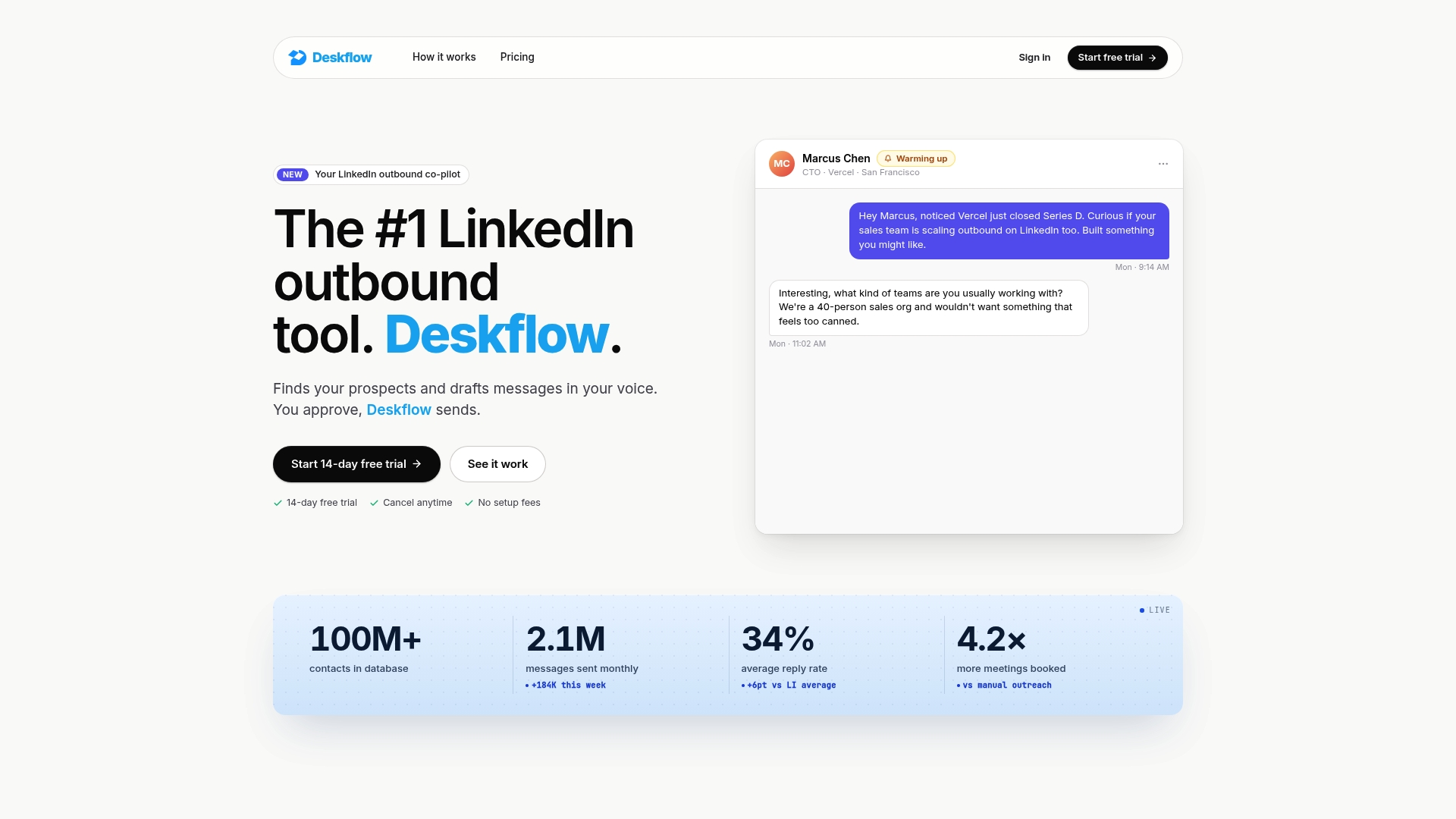
Deskflow handles that work automatically. The platform pulls prospects from LinkedIn Sales Navigator, enriches contact data, generates personalized messages based on each prospect's LinkedIn profile and recent activity, and automates follow-up sequences. Your SDRs spend their time on conversations, not admin. That shift directly reduces cost per meeting and improves the ROI numbers you're trying to defend.
FAQ
What is outbound sales ROI?
Outbound sales ROI is the ratio of revenue generated by outbound activities to the total cost of those activities. It measures the true profitability of your outbound program, not just its activity level.
How do you calculate outbound sales ROI?
Divide total revenue attributed to outbound by fully loaded program costs, subtract one, and multiply by 100. Fully loaded costs include SDR salaries, tools, data enrichment, and management overhead.
Why is positive reply rate better than raw reply rate?
Positive reply rate counts only commercially interested responses, filtering out unsubscribes and out-of-office replies. A lower raw reply rate with a high positive share predicts better pipeline quality than a high raw rate with mostly negative responses.
How long does it take to see outbound ROI?
With average B2B sales cycles at 6.5 months, full revenue attribution takes two to three quarters. Use pipeline created and cost per meeting as early indicators within the first 30–90 days.
What four numbers do finance teams need to approve outbound budgets?
Finance teams expect pipeline created, total program cost, win rate, and expected lifetime value. These four numbers let budget holders model projected return and make a data-driven funding decision.